
How do we fix American elections?
A political scientist's take on designing better political institutions.

This is the fifth post in a series of posts about a phenomenon in American politics I call the "polarization paradox". You can read about what exactly that is here.
I’ll say it: I strongly dislike playing board games.

The stakes somehow feel both very low and very high, everyone else who plays them is kind of annoying (unclear if this is about who selects into board game playing or board games causing people to become the worst versions of themselves), and no one ever explains the rules well so it’s hard to remember them unless you’ve played the game with these annoying board game nerds many times before.
This, I think, also describes how participating in elections feels for many Americans with its labyrinthian rules, increasing politicization, and wildly uneven ‘purchasing power’ on policy outcomes across the geography of the United States. Except despite how the stakes might feel, they are immensely high for the ‘recipients’ of the prize that’s allocated at the end. And, like actual board games, it’s hard to imagine changing the rules of the game while you’re playing, even if the game really sucks.
Recently, I had a great conversation with Oscar Pocasangre, a political scientist and researcher for the political reform program at the think tank New America, and he used exactly this board game metaphor in describing the difficulty of changing how elections — and other institutions — are run in American politics.
Oscar, who has a deep background in comparative politics and development economics, started with stark observation that’s both uplifting and bleak: we’ve done enough research to know how to solve most of the welfare problems in the world, but politics is what gets in the way of implementing those solutions.
Below is a lightly edited transcript of our conversation on how we can fix the rules of the game (elections in particular) in American politics.
SB: What would you say is distinct about American politics from political systems elsewhere in the world?
OP: There's definitely a lot of surprising things about American Politics — even shocking things. Though I would preface by saying that the U.S. is not that unique. It shares a lot of commonalities with other countries and it really is just one more case in the comparative politics portfolio of cases. Often times in the study of American Politics, we forget that and it becomes so inward-looking that it prevents us from seeing the lessons and insights from other places that have had similar problems.
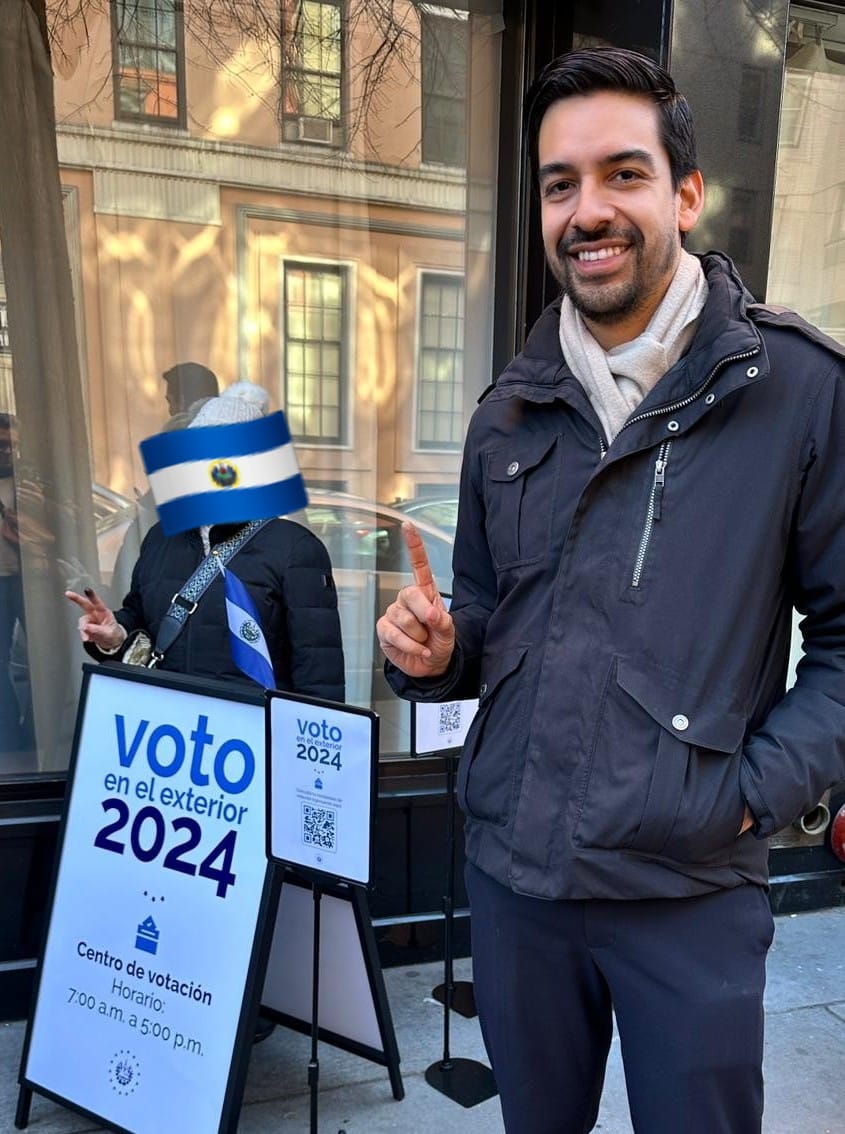
But so, a couple of things that always shocked me about American politics: one is how elections are carried out. I'm a citizen of El Salvador and Guatemala and I voted in both countries there. Obviously these are not paragons of democracy, but the administration of elections is (usually) very organized — there's a national institution that calls and audits the vote and the vote count is done very quickly. You don't need to wait, like, 7 days to get the results: by midnight, you usually have the results of the election.
Another thing that I think is very special in the U.S. is the amount of money goes into into political advertising here. It's just insane the amount of dollars that go into a race and especially when it's so many races are so predictable. But it's just an arms race to fundraise as much money and then also all the downstream incentives of that where most of the time for a politician is spent in fundraising mode.
That was another thing that shocked me about members of Congress: their term is only two years and almost half of that is spent on fundraising and campaigning. So in terms of the creation of expertise and really figuring out the job, it's a big concern.
I was just reading this book [Tyranny of the Minority by Steven Levitsky and Daniel Ziblatt] that really makes a case of how the U.S. Constitution is very unique in the world in terms of designing a political system that really favors the political minority and that is really hard to change the rules of the game — for better or for worse.
SB: Coming to the work that you do at New America now, how do you think about these features (or bugs) of the American political system and how they're related?
OP: Much of our work is focused on electoral systems and electoral reform, so that is the framework through which I see a lot of these issues: finding connections between the American electoral system and current institutional problems.
So trying to understand how a combination of our current electoral system with our current demographics the way that people are spread out over the country contributes to things like polarization and money in politics and the difficulties in changing the institutions in American politics. I guess because of the work we do, I have that bias of trying to understand things through the electoral system.
The other frame is more about democracy and trying to understand whether these institutional bugs or features prevent us from hearing the preferences of every voter. And what are the long term consequences of this for strengthening democracy, particularly when we think towards the future where the U.S. could ideally be a multi-racial democracy — would we be able to get to that point with our current institutions or do we have to change to get there?
SB: One thing that I've been harping on a lot is this theory of the polarization paradox, where increased polarization actually has this dual feature of making a lot of things really predictable, but at the same time, important aggregate outcomes hinge on really unpredictable factors.
I've been really obsessed with this question of, like, how do we get out of this equilibrium. What kinds of reforms, either electoral or beyond, do you think would help us get unstuck from this polarization paradox?
OP: I like the analogy that Lynn Vavreck and her co-authors have of the calcification of politics — where things are so fossilized, so they rarely change, but also precisely when things are so calcified, that's when they're very brittle, and it only takes a little for everything to break apart. And that can really put the country on a completely different trajectory.
I think you want a mix. You want politics to be predictable in the sense that you want the rule of law to be there to protect all the good things like investments in the future — making sure people will be able to retire, making sure businesses can invest in long term benefits for their employees, things like that. But you also want a system that is nimble enough to incorporate new ideas and welcome new voices.
To that end, a more proportional system would make things a bit less predictable because they rely so much on multi-party coalitions that are always shifting. But at the same time, it makes the system more resilient to shocks, whether it's an authoritarian threat or an economic crisis, because it better represents the interests of different sectors of the electorate. The big question is, how do we get there in the 2020s? (I don't think I've ever said that before ... the 2020s!)
Historically, how countries have transitioned to proportional representation has been in response to threats: like a threat from the Socialist left in Europe that led parties to open up the system to make sure that they still had a say if some other party won. Or it's been as a controlled opening of the system under authoritarian regimes.
So what would be the path be for the United States to move to proportional representation? It's a big challenge, because we have a lot of reforms like expanding the number of members and/or the number of districts in Congress. For example, making it so that it's not just one person who wins in a given congressional election, but actually like 4 or 5 people in each district.
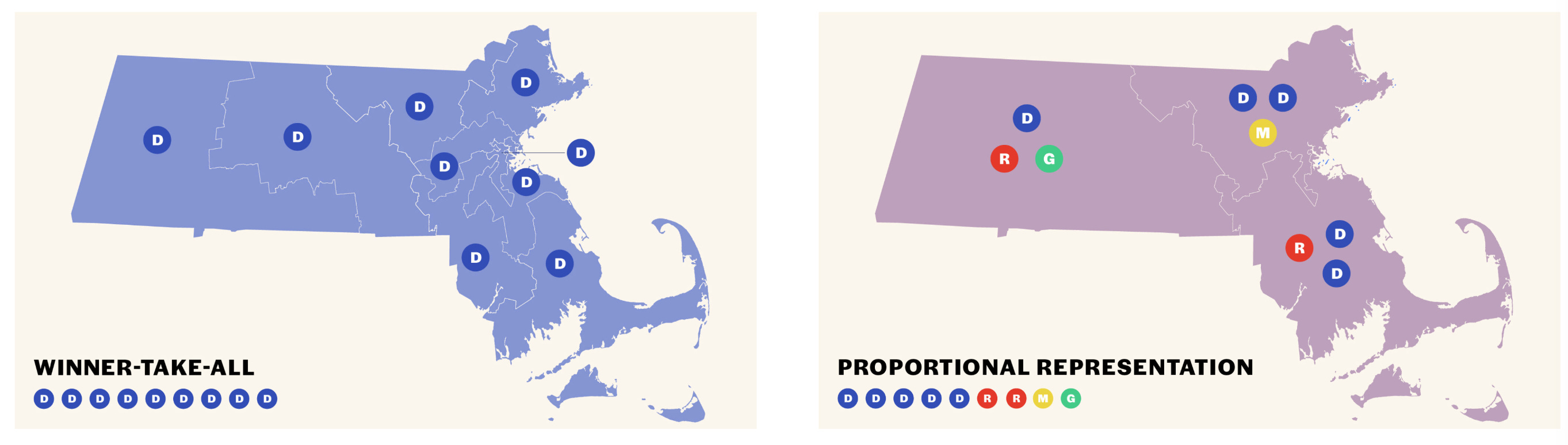
Or getting rid of the Electoral College, right? There's also a lot of energy for ranked choice voting and more recently there's been more interest in fusion voting which people associate with the more vibrant party system of the 19th century in the United States. Fusion voting is when the same candidate appears under different party lines in the ballot, and the idea is that this would allow smaller parties to develop their brand and their party infrastructure. By having that space on the ballot that could be a stepping stone towards a multi-party system.
But as we were saying at the beginning, we actually know the solution to a lot of these problems … figuring out the politics to implement these reforms is the challenging thing.
SB: To push back a bit on that: obviously at the elite level there are these barriers. But if you're telling me, as an ordinary voter, elections are going to change and things are going to get even more complicated than they alreaedy are, I'm going to have to follow these new specific rules about what party banners candidates are under and now I have to vote for more than one candidate ... how do you make that appeal to the public?
OP: There's definitely going to be some transition costs and we'll need a lot of civic education and campaigns to inform voters how to vote and how to use different types of ballots. Usually we talk about the options out there as majoritarian versus proportional representation. But there's a slew of different types of PRs. Whether you go for the party or for candidates within the party, whether you rank the party list or not.
And I think yes, there might be some confusion at first. But most of the world has had reforms and voters around the world have adapted to them eventually. So I like to give the American voter credit here; that they will be able to adapt to it with the right information. This is where the parties come in and they may benefit from that, they'll have incentives to educate voters.
At least what we've seen from other countries — and also in cities and states in the U.S. — that have had these reforms, voters tend to like it. It makes their vote more meaningful, once they figure out the system and understand the benefits of it. So it's a worthwhile investment for democracy.
SB: Pushing back on a different dimension — you've been saying that bringing more voices to the table is good. And we've had these progressive electoral reforms in the 20th century that have enabled this, but we've also historically had a lot of barriers like a relatively closed primary system. In the aftermath of the 2016 election, especially, we heard some voices say that if we had kept more of that gate-keeping (e.g. fewer primaries by popular vote) demagogues like Trump wouldn't have made it so far in the process.
So along those lines: are there any risks from opening things up like you're saying? For example, making it easier for more anti-democratic voices to come to the fore and potentially undermine democracy in the long run?
OP: I mean, yeah, there is a risk. Obviously, no electoral system is a panacea. There is always resistance within the U.S. towards a multi-party system: that it would be chaotic, and that it would allow for fringe and extremist parties to arise. But I think as long as those extremist parties are not anti-democratic — if they agree to rules of the game — it's fine in the sense that I think democracy should listen to those voices.
And then for a multi-party system, sometimes it forces more consensus. So what you actually see in a lot of countries where these extremist parties emerge, they eventually have to moderate if they want to continue being viable. Yeah, they can have their own party and yeah they'll win some seats. But they won't be as influential as they would be in a two-party system, where the alternative is for the extreme faction to take over one of the established parties as we're seeing here in the U.S. with the Republican party.
And the other thing is a lot of the sentiment against democracy in the U.S. comes from having just two options. Every election has become so existential, where if the other party wins, that's the end of it. But the other party thinks the same. So it makes it seem that the stakes are so high during each election and it helps justify the violation of democratic norms. Whereas I do think you do see some anti-democratic sentiment in multi-party systems, because there are more actors out there, it forces those anti-democratic forces to moderate.
The other thing I was going to say is that, as a voter, because you also have more choices, partisanship no longer becomes such a big part of your identity. In the U.S. being a Democrat, being a Republican, it's a huge part of your identity and explains a lot of your political behavior and political views.
But if you have a multi-party system, then one election you can vote for one party and if you don't like them, the next election you can switch. The party doesn't become your identity and I think that's healthy for a democracy.
SB: Talking about this in the context of pluralist, proportional democracies around the world — many of them are not candidate-centric at all. Elections are often not even about any single person. How do you think this focus on candidates in the U.S. — for whatever reason, I don't know, idol worship or celebrity status — undermines or supports democracy?
OP: In a lot of proportional systems, it's more about the party, and you're voting for the party, not the candidates. But there are a lot of systems like open list systems, where the party puts forward their list, and then voters can rank or choose candidates. So you still have some choice for the candidates themselves.
But yes, the party has more power there and because a party has to recruit candidates, and they've had to maintain a brand for their voters, it creates more incentives for developing party infrastructure that is able to hold its members accountable. As a party, you want to keep winning elections. So you want to make sure all your candidates are performing well and if they deviate too much from your policy platform that they come back to that.
But it's harder for parties in the U.S. to deal with that. Because they've been so hollowed out where the party itself doesn't have that much control over individual candidates or policy platforms. And politics is more about the individual candidate, about personal brands at the expense of party cohesion. That feeds into a bunch of other problems like campaign financing: each candidate has to raise certain funds to run instead of relying on the party pool of money.
And the trade-off people always mention is: well, at least you know who's responsible for stuff, you have your one representative you know; it's easier to assign blame or sign credit. Whereas in multi-party systems it might be harder to hold an individual candidate politician responsible.
But I think there are ways of designing a multi-rep proportional system that both strengthens the party creating incentives for developing a strong party-wide infrastructure that both helps its candidates and keeps them accountable, but shares the limelight with individual candidates. Some countries like Germany do a mix of proportional and single-member districts. So they're trying to get the best of both worlds where you still have your one representative, but you’re also voting for the party at large.
So there's a lot of room for designing these systems, and I think it requires a lot of creativity.
SB: Is there anywhere else in the world or in the U.S. where these kind of reforms, whether it be fusion voting, or proportional representation in any number of ways, has worked? Where in the world is there hope for democracy right now for you?
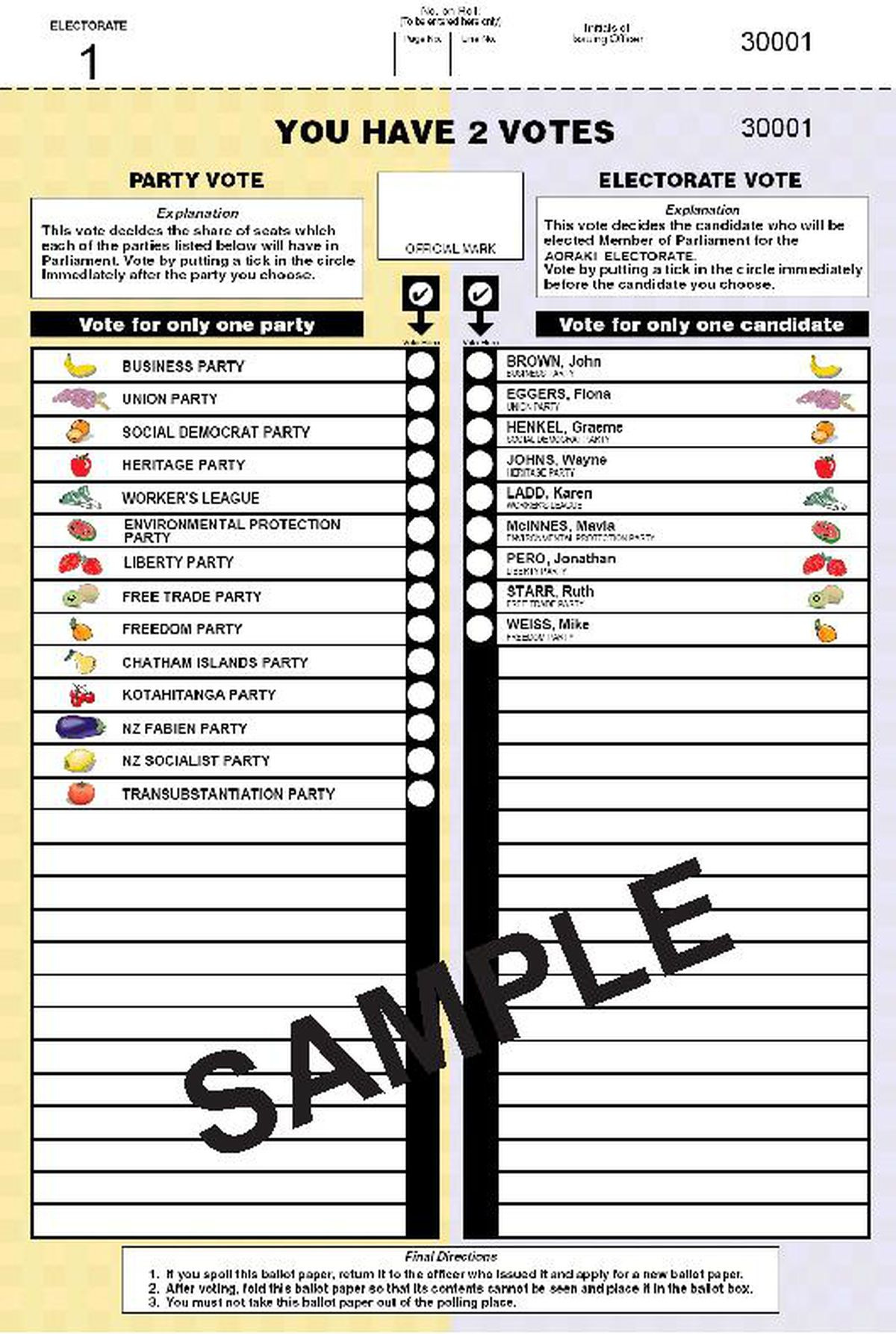
OP: New Zealand, is always cited because they had a system quite similar to the U.S. inherited from British rule with single member district. But they had a period where the losers of each election kept winning a lot more seats in the legislature than the vote shares would justify. This ended up being very frustrating for voters and it created a lot of energy for reform.
What gives me hope for reform in the U.S. is that there is a lot of experimentation and energy for reform at the local level, at the State and city level. And in many different directions. There's a lot of cities and states that now use rank choice voting, which I see as a more of a candidate-centered reform, and less of a party-centered reform. But it's still in the effort of making sure your vote counts in an election, and that whoever gets selected has majority support. Which is not always the case in single member district elections. You're also starting seeing cities like Portland, Oregon switching to proportional representation. So yeah, that is actually one of the advantages of the very decentralized and federalist system in America, that it allows for these smaller reforms locally.
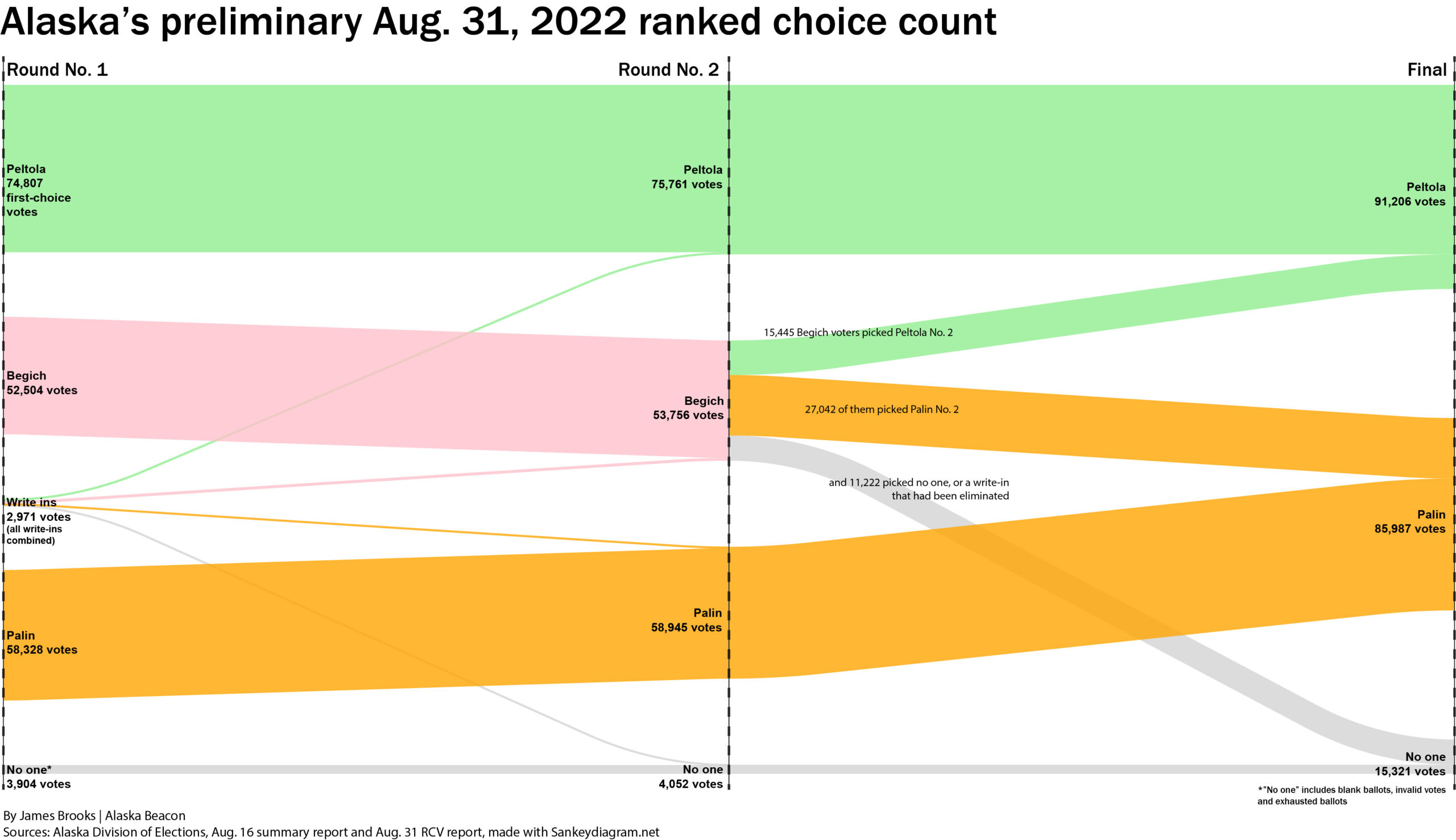
But I do worry that because of where these reforms are happening, they're quick to be politicized. You're already seeing a lot of push back from Republicans against rank choice voting because of how it worked out in Alaska with the election of Mary Peltola. So that is a challenge to keep in mind. It might put states in very different trajectories if we only see reforms in blue states. In red states it might lead to a lot of inequality in how people vote.
This is all part of the problem when a party has gone so far to the right that and so anti-democratic that they're not willing to lose elections anymore. I don't really know what comes first: do we reform the system first, and then fix these other problems or are there ways to fix things like asymmetric polarization which would then allow for reform?
Or do things have to get super bad first for reforms to be needed? It's a big question mark.
Oscar Pocasangre is a senior data analyst for the Political Reform program at New America. For work referenced in this post, see “The Realistic Promise of Multiparty Democracy in the United States” and “Democracy Hypocrisy”.
Good question and good point. There are more incentives for (or rather fewer incentives against) testing these reforms at the local and state levels. Many more places than Seattle and Alaska have some form of voting other than first-past-the-vote (including right here in NYC!) and there are lots of entrepreneurial local reformers willing to get behind these experiments — especially if it helps them win office. One could imagine this eventually tried out on the national stage in a few presidential primaries if there’s enough popular appetite for it (like there was in 1968 for more primaries altogether). But that would probably involve both some civil unrest and some “reinvention” of the parties themselves as you’re saying.
Very interesting. I love the boardgame analogy!
Re: "What kinds of reforms, either electoral or beyond, do you think would help us get unstuck from this polarization paradox?"
How do you create an incentive structure inherent to the US political system that facilitates those reforms (and preventing calcification)? Is that essentially rank choice voting / proportional representation? Are there more ways?
I believe every organizations need to go thru cycles of growth/death/reinvention to stay relevant and effective, and they need to manage those periods of transition in a way that is not as jarring (eg. civil unrest)